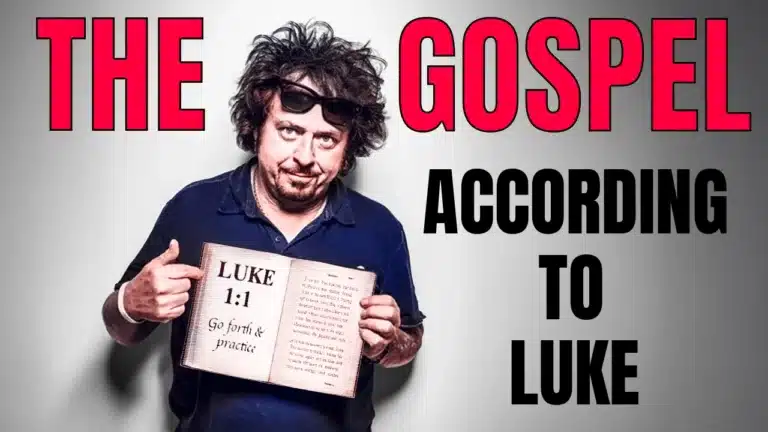
Larry Carlton is one of the tastiest guitarists on the planet. There never seems to be a wasted note in his playing, and every choice always seems to be the right one. In this lesson, we’re digging into his unique approach to improvising and visualizing the fretboard using triads — a concept he calls “chord over chord,” sometimes referred to as the Super Arpeggio.
If you’ve ever felt stuck inside scale shapes when improvising, Larry’s method is a brilliant way to break out of that rut and into fresher, more sophisticated, and more exciting lines.
We’ll be working over two useful harmonic scenarios:
- A major 7/major 9 sound
- A largely static dominant 7 sound
Even though scales exist in and around most of the licks we’ll look at, Larry tends to think in terms of the notes fleshed out from the triad rather than the wider scale shape. For me, this is what defines his trademark sound.
The Super Arpeggio: Stacking Triads
The concept starts with a simple major triad. Let’s build one from B♭:
- B♭ major triad — B♭, D, F
Now take the second note of that triad (D) and build a triad from there:
- D minor triad — D, F, A
Take the second note of that triad (F) and build again:
- F major triad — F, A, C
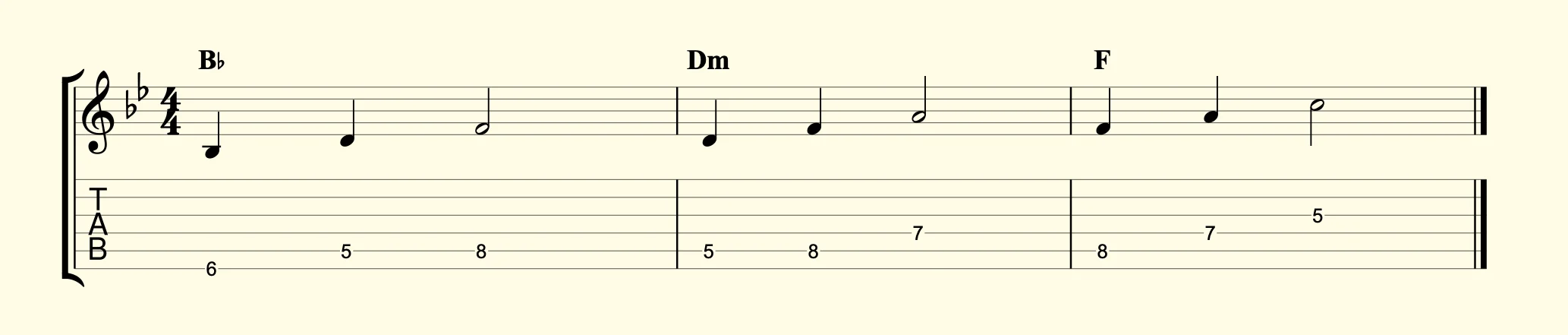
Here’s the first powerful idea to grab hold of: combine the first two triads (B♭ major and D minor) and you get a B♭ major 7 chord:
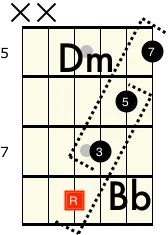
Combine all three (B♭, D minor, and F major) and you get a B♭ major 9 chord:
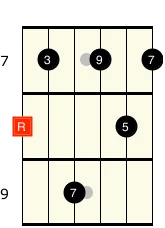
At this point you’ll run out of fingers trying to play it as stacked triads, so it helps to use a more practical voicing. The one above is a bit awkward, so what a lot of guitarists do is pair the shape back like this:
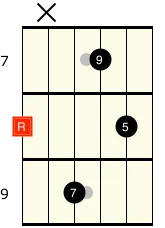
Although this doesn’t have the major 3rd, it gives us the “flavour” of the chord. You’ll notice something interesting: sitting on top of this chord is an F major triad in first inversion over a B♭ bass.
This is where things get exciting, because we start hearing extensions above the octave — the color notes, or what Larry calls his “money notes.”
Targeting the Money Notes
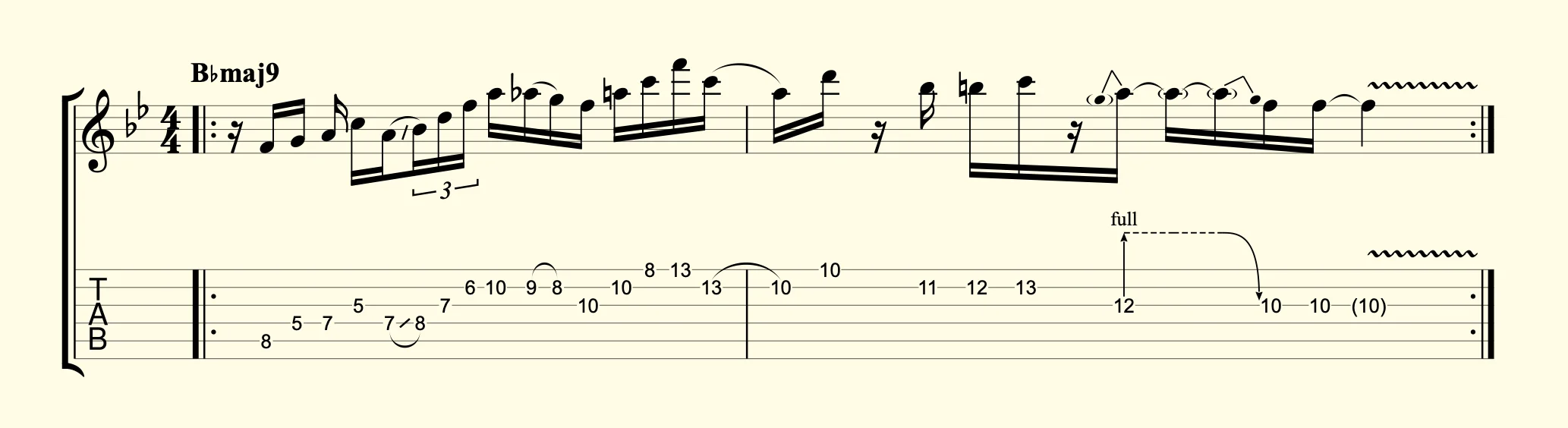
A classic Larry move over a major 7 chord is to pivot around the I and V triads of the key — in this case B♭ and F major. This example shifts between these two using chromatic passing notes to make it sound more “hip”:
Pentatonic Substitution (Up a 5th Trick)
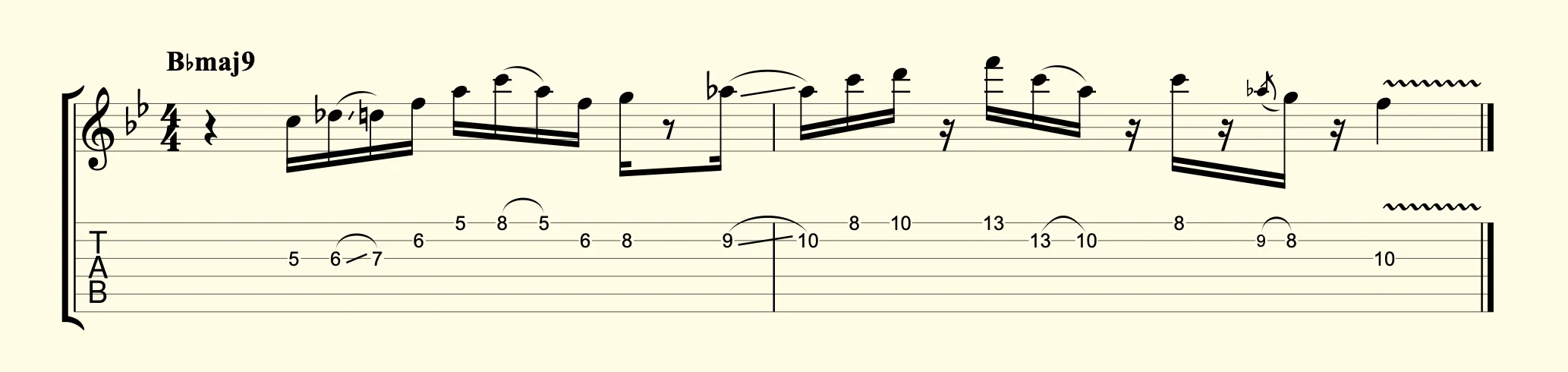
There’s also a simple pentatonic substitution trick worth knowing: playing an F major pentatonic line over a B♭ major 7 chord. This is a very typical Larry move over a major 7 chord and works beautifully, since F major pentatonic picks up on the colour/extension notes of major 9th and major 13th:
| Interval | 1 | 2 | 3 | 4 | 5 | 6 | 7 | ||
| Bb maj | Bb | C | D | Eb | F | G | A | ||
| Interval | 5 | 13 | 7 | 9 | 3 | ||||
| F MP | F | G | A | C | D |
This is just B♭ major pentatonic transposed up a fifth. So you’ll often find Larry simply transposing B♭ major pentatonic licks (or whichever key he’s playing in) up a 5th. Even when you’re thinking “F major pentatonic,” it’s important to keep the underlying F major triad in your mind’s eye. You’ll be able to see a mix of F major arpeggio and F major pentatonic in the second bar:
Introducing the Lydian Sound
Keep stacking triads using the alternating Maj/Min sequence past the major 9 chord, and you’ll run into the first non-diatonic “outside” note on A minor — the ♯11, giving you a Lydian sound:
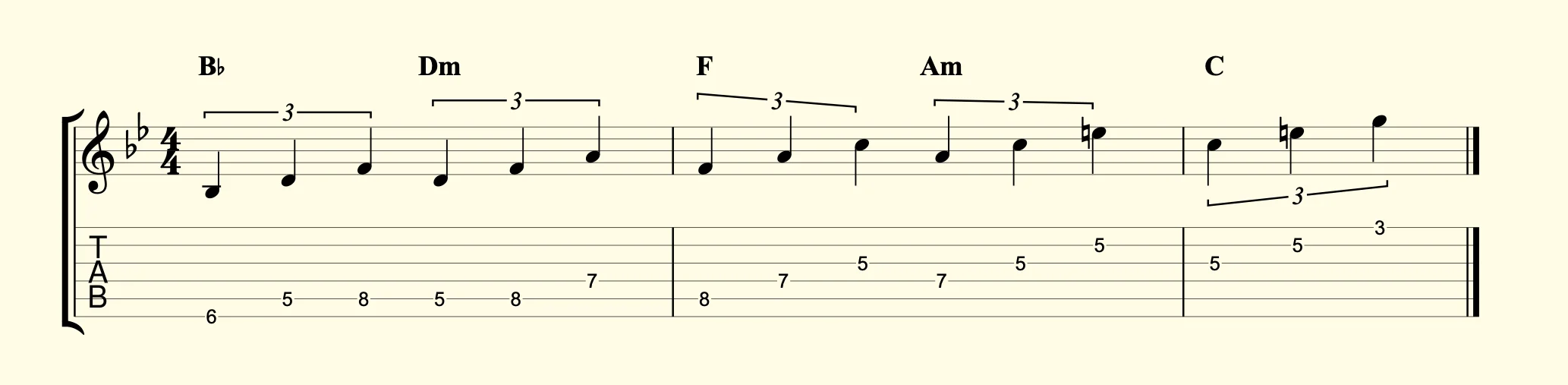
The next triad in the sequence, C major, is particularly evocative of that Lydian colour and is often paired with the home triad (B♭). Together, these form a Lydian triad pair (meaning a pair of triads that don’t share any common notes):
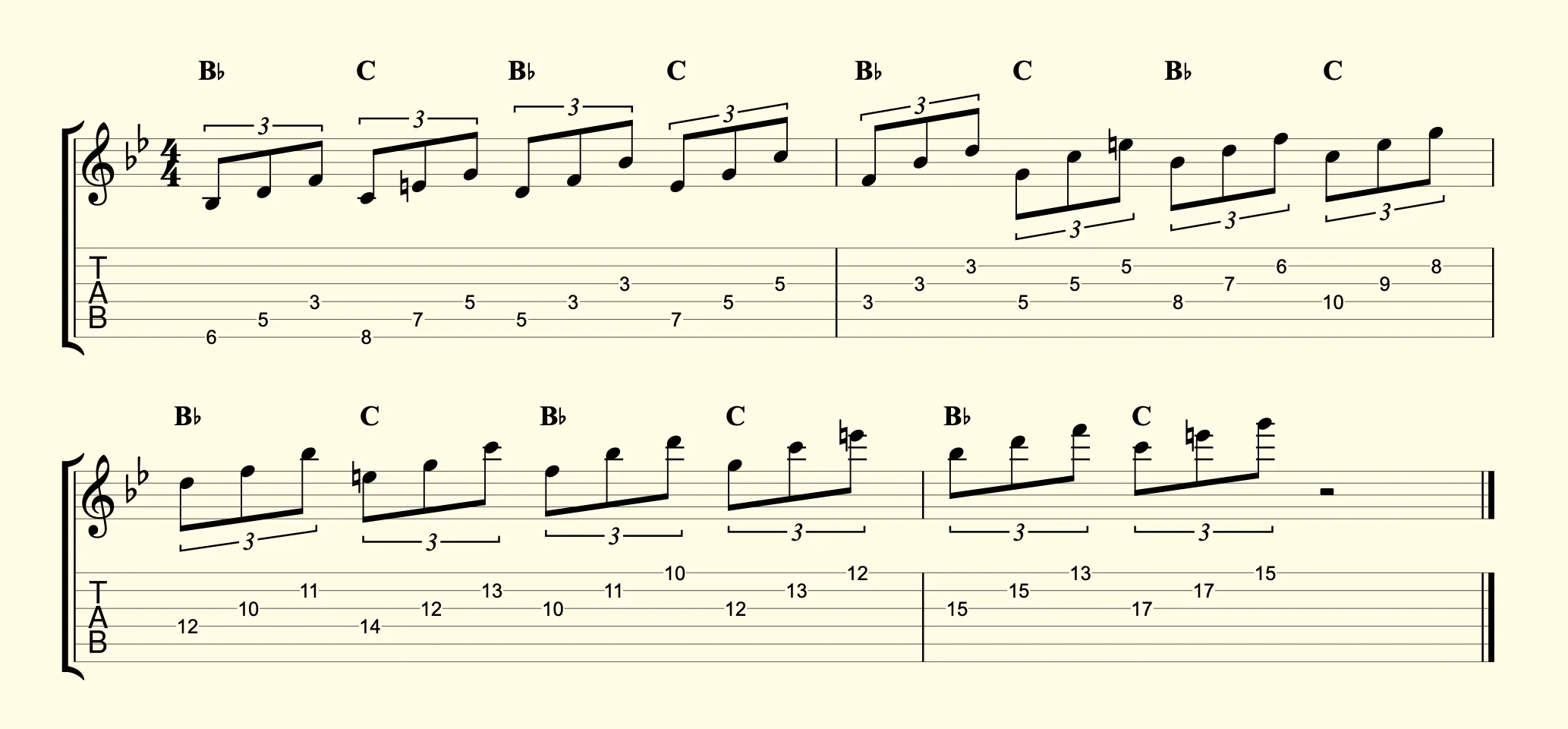
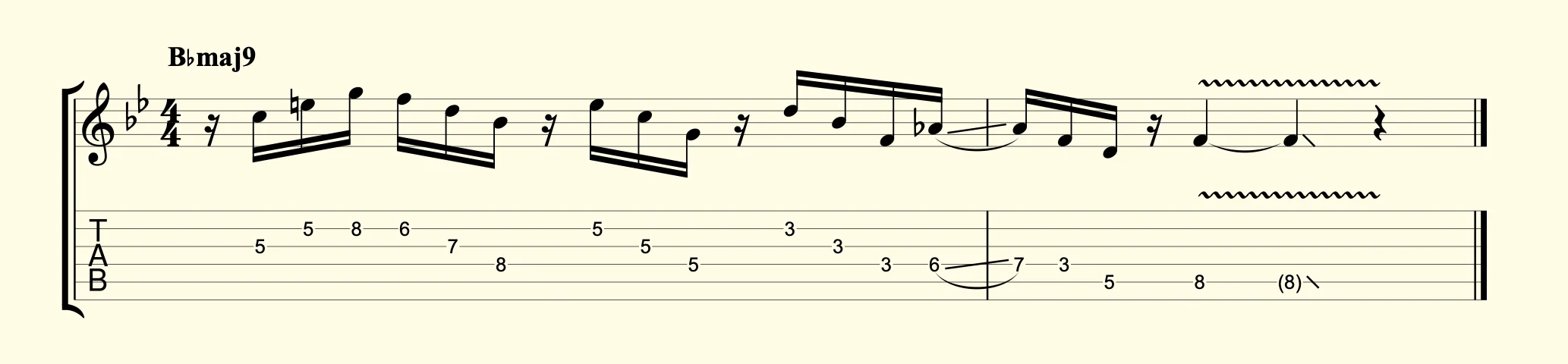
It’s worth practicing your B♭ and C major triads all over the neck like this. But be careful — played as a straight arpeggio pattern, this can sound like an exercise. To make it musical, interrupt the pattern and the rhythm, and bring in phrasing devices like slides, bends, and rests:
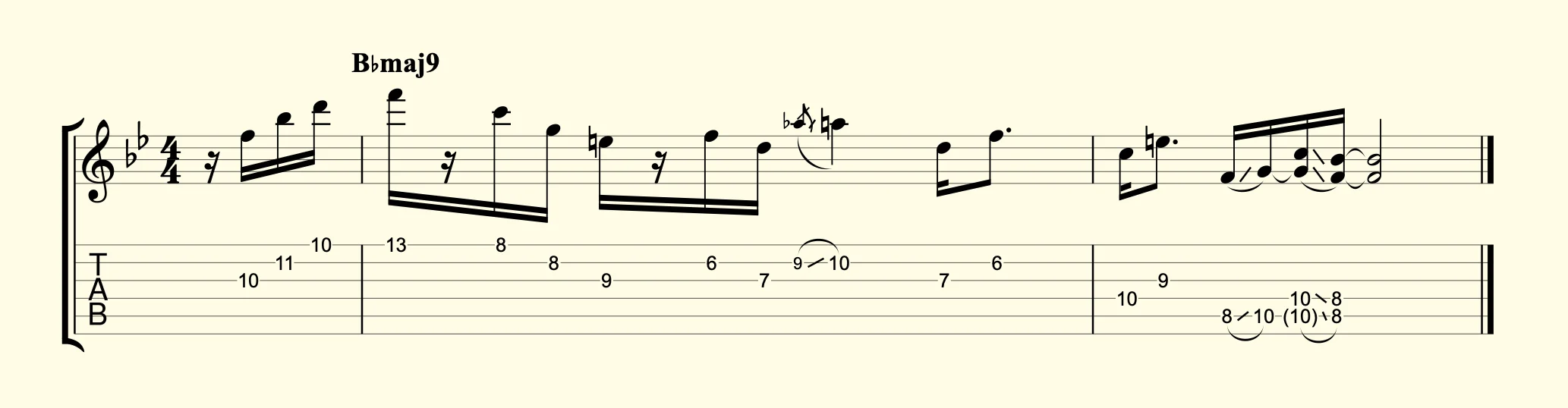
Here’s another example that uses triad inversions but this time higher up the neck on the top three strings, again varying the rhythm:
Applying Triad Pairs Over Dominant Chords
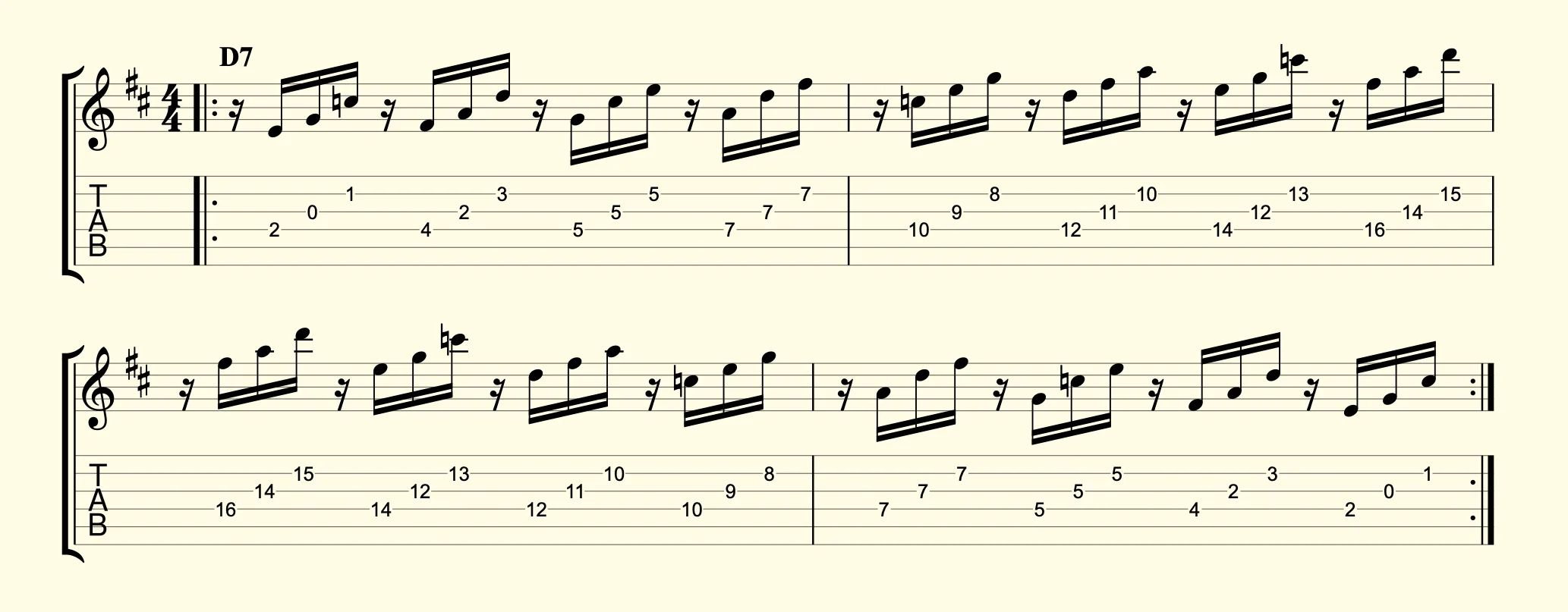
Now let’s shift to a dominant scenario: three chords moving from D13sus to D7 to C/D. We can outline this whole sound using another triad pair — C major and D major — derived directly from the chords themselves. Together, these two triads outline most of the notes of a D Mixolydian scale, without ever needing to think of the scale itself.
Practice all the permutations of C and D triads across the neck — this is exactly what gives you a completely different perspective when soloing.
The Full D Super Arpeggio
Stacking triads from the root gives us a whole family of options over D7. This one’s slightly different to the alternating Major/min pattern however:
- D major
- F♯ diminished
- A minor
- C major
- E minor
- G major
- B minor
Any of these will sound great over a D7 groove. But rather than learning each shape in isolation, it helps to notice the connections between them. For example, take the D13sus chord:
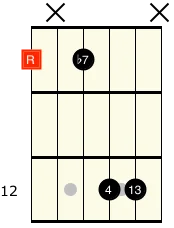
Change the root to A, and you get A minor 9:
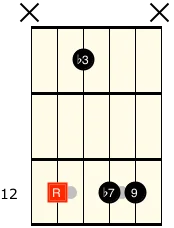
Change the root to C, and you get C major 9 (with a G major triad sitting on top)
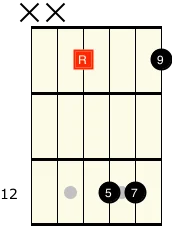
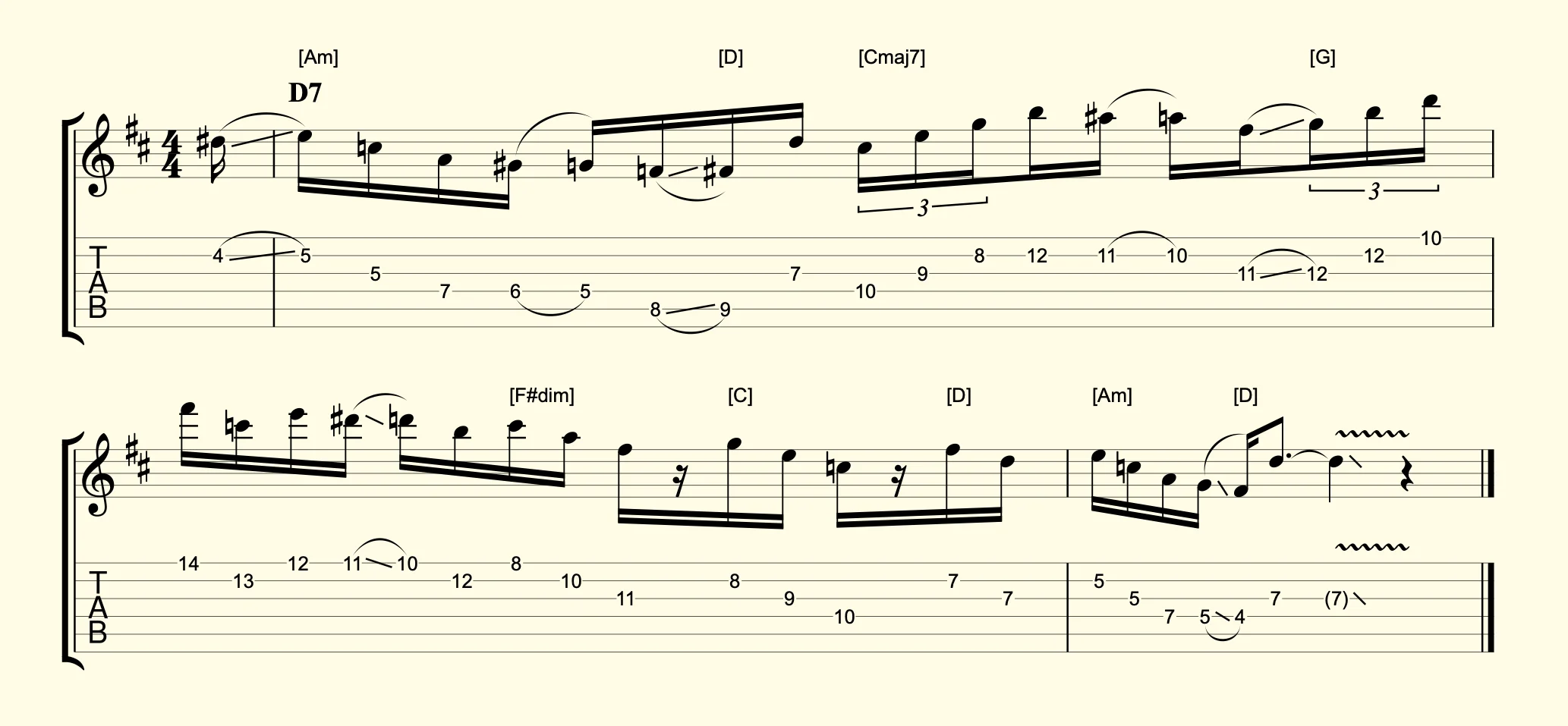
This is the essence of viewing chords and triads from multiple angles — and once you start combining and substituting triads this way, you can build increasingly complex harmony from very simple building blocks. You can also start layering in some chromaticism on top of these superimposed triads for a little extra “Larry spice.”
Superimposing Major 7 Arpeggios
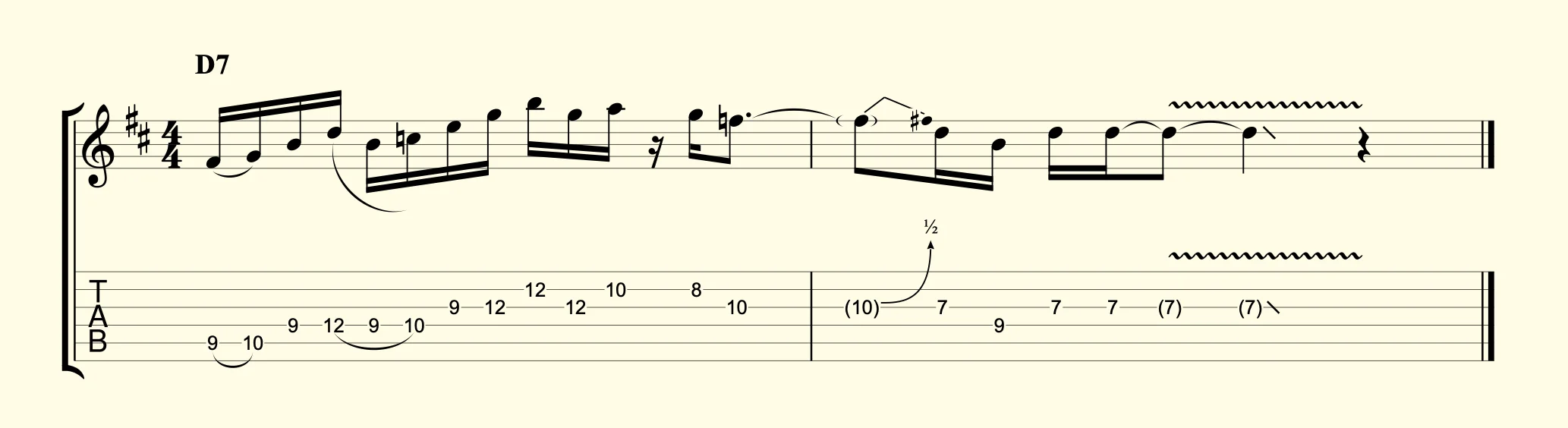
Another common Larry trick over dominant and dominant-sus chords: superimpose major 7 arpeggios a whole step and a fourth above the root. Over D7, that means bringing in G major 7 and C major 7 arpeggios to really target those upper-extension money notes. Larry often starts these arpeggios on the major 7th interval itself, which helps create smoother, more fluid phrases:
Pentatonic Substitution (Again)
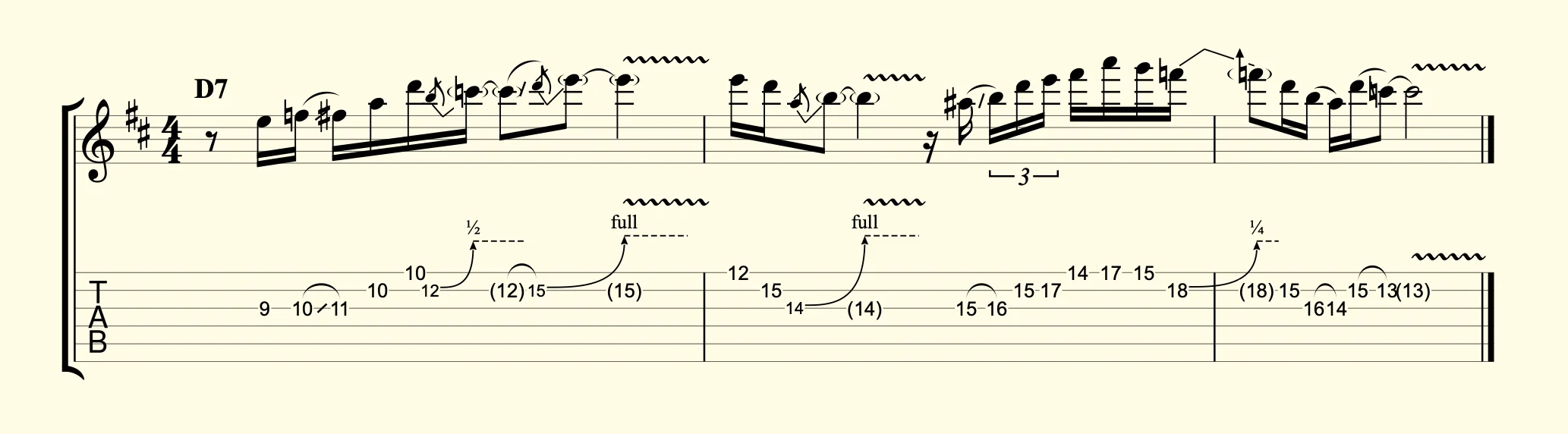
This next idea grows directly out of that V over I thinking from example 1, but we can apply exactly the same principle over a dominant 7th chord. You can simply play a G major pentatonic scale over D7 and land right on those same upper-extension money notes. You could also think of it as E minor pentatonic — the relative minor — it’s entirely up to you and how you hear it:
Takeaway – Using It Into the Real World
The final — and arguably most challenging — step is applying all of this to real musical situations, across different keys and chord types. Larry very rarely sits in one key for long, so working across multiple key centers (as we do in the backing track for this lesson) is essential for really internalizing this approach.
You can purchase the backing track over in my shop.
Spend time with different seventh chord types and look for your own connections between them, the way we did above. As always — have fun, and go find your own money notes.