V to I Resolution (Part 1)
Lesson TAB
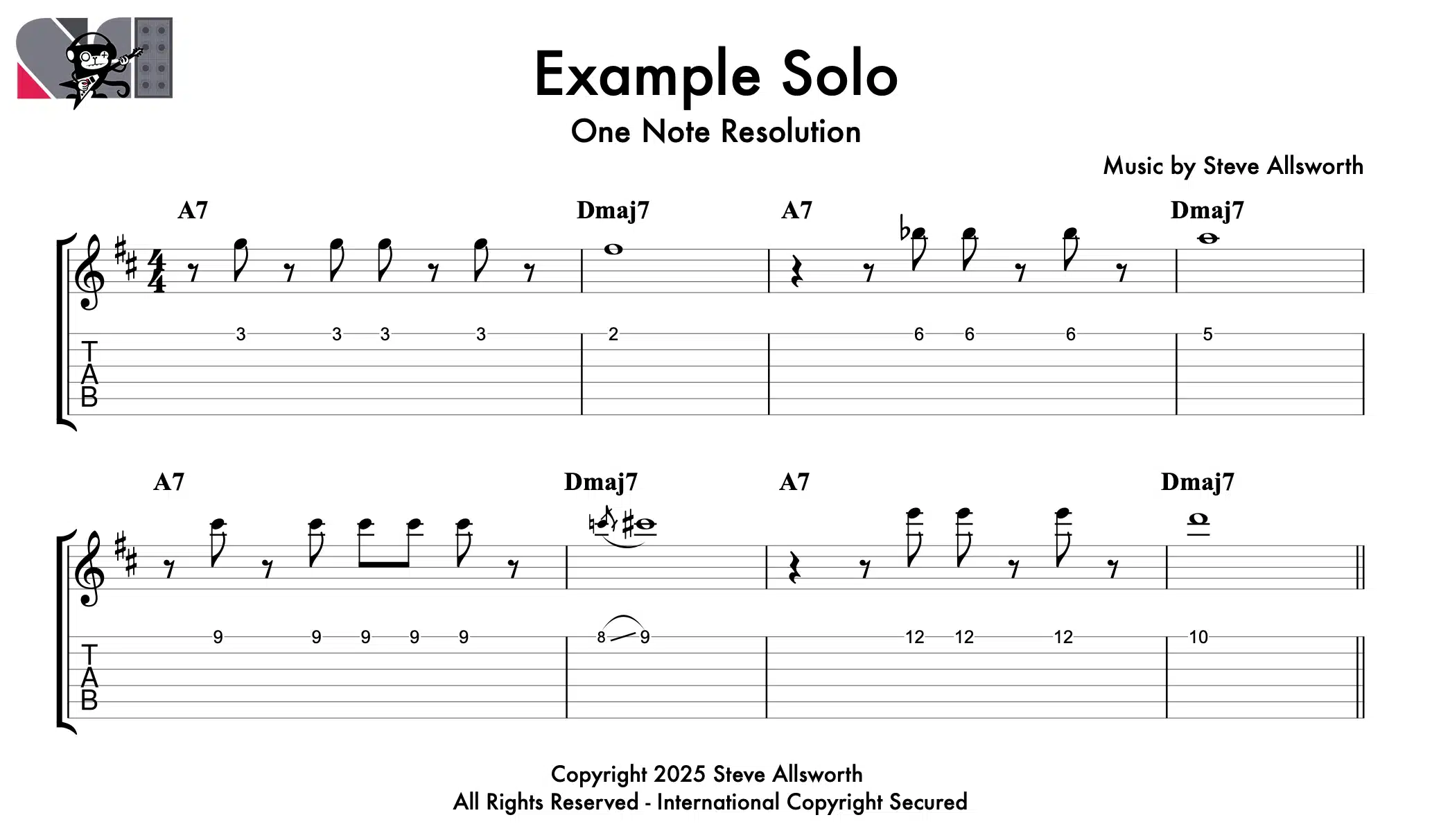
Lesson Material
V to I resolution (perfect cadence) has a natural “pull” towards the I chord. For the first part of this module, this will be A7 to D major 7:
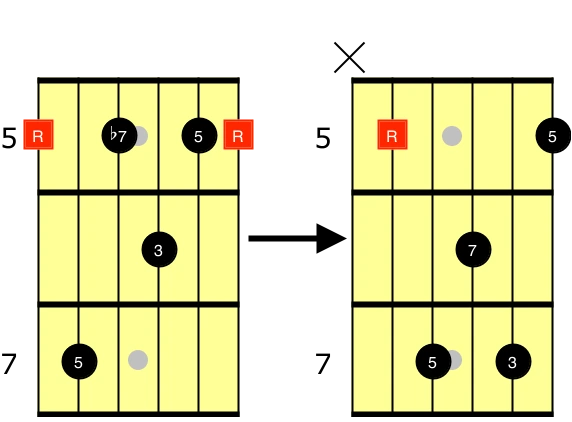
If you’ve been following through Modules 1 & 2, you should be comfortable with the idea of playing a H/W diminished scale over a dominant 7 chord. All that’s doing is adding more tension to the dominant chord, the idea being that there’ll be an even greater sense of resolution when we go to the I chord:

We could of course practice the scale as above, but it’s very easy to “get stuck” in the scale shape and then struggle to find the “off ramp” when we go the next chord. This is something that many of students experience when trying to practice this way.
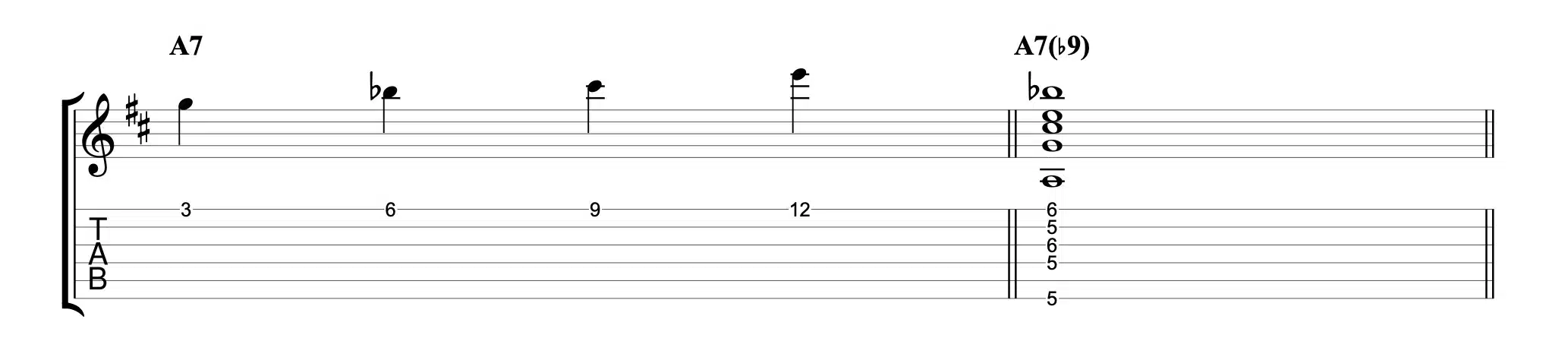
Instead, let’s think about resolving from the notes of a diminished 7th arpeggio. Here we’re playing G diminished 7th, but in reality, it’s spelling out the upper harmony of an A7(♭9):
There’s natural resolution to notes within Dmaj7 (our I chord) that you should be able to hear straight away:
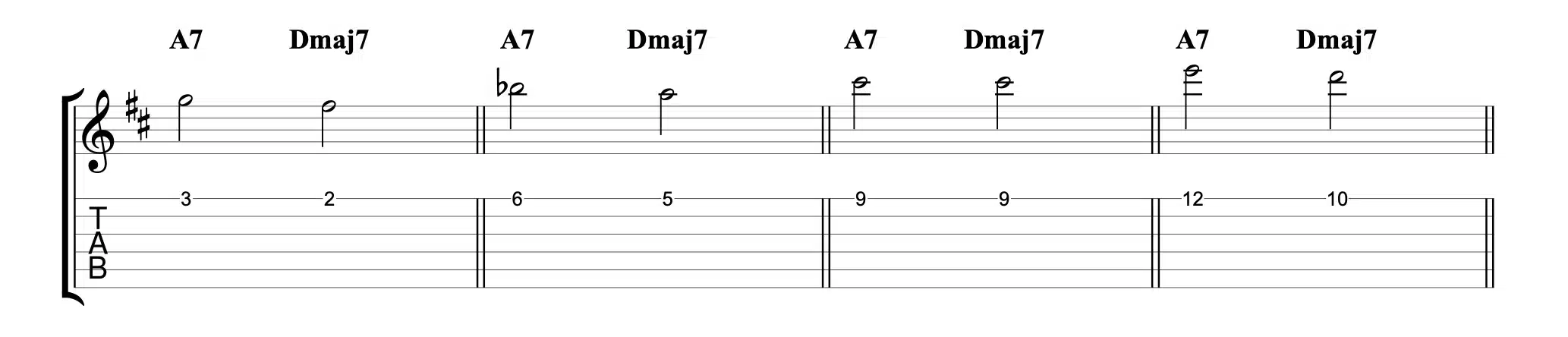
So, in relation to our D major 7 chord:
- G resolves down to F# the 3rd
- Bb resolves down to A the 5th
- C# a “common tone”, as it’s in both chords – here it resolves to the major 7th
- E resolves down to the root
You’ll find my basic example solo on the previous tab, using that same resolution over a Latin Bossa style groove.
It’s worth noting that all the lines that we’ll practice over the Bossa, could potentially work over any genre or feel – we’re just starting with this style as it’s slow enough to give you plenty of thinking time! Really try and hear the resolution – if you can, try and sing the notes as you play them.