How to Resolve: Seeing the Chords
Lesson TAB
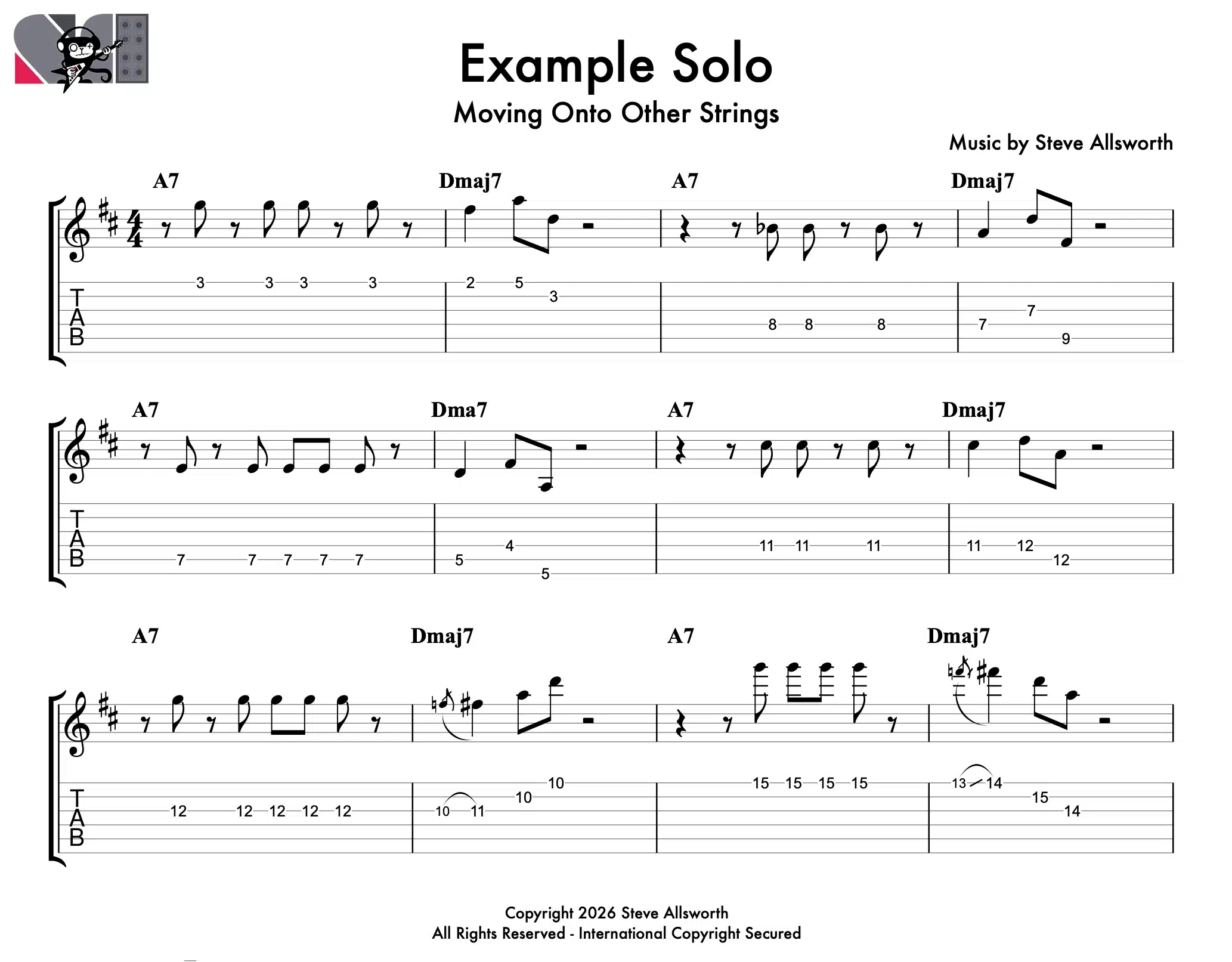
Lesson Material
This voice leading approach is simple, yet remarkably effective. One of its most valuable aspects is that the sense of resolution can often be heard internally before it’s even played. This encourages a more musical, ear-led understanding of harmony, rather than one confined to memorised scale shapes or finger patterns.
A natural extension of this idea is to explore these same resolving notes across different areas of the fretboard.
As you do so, a clear pattern begins to emerge: the notes are all connected through smooth voice leading derived from our moveable diminished seventh chord shape:
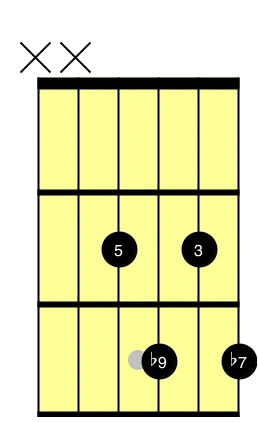
Although we could see this as E diminished 7th we’re thinking of it in relation to A7.
Seeing these diminished 7th chords helps to reveal all the resolutions we’ve talked about:

This perspective can be expanded further by repositioning the root. If we shift this diminished shape around in minor 3rds, we’ll have a new set of pathways while preserving the same underlying voice-leading principles:
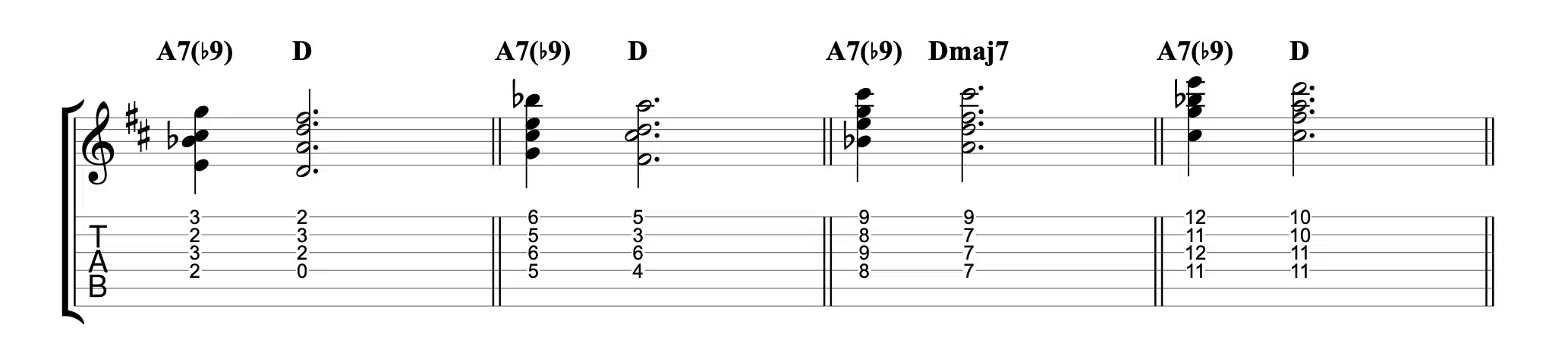
Likewise, we can do the same thing with the 5th string as the root:
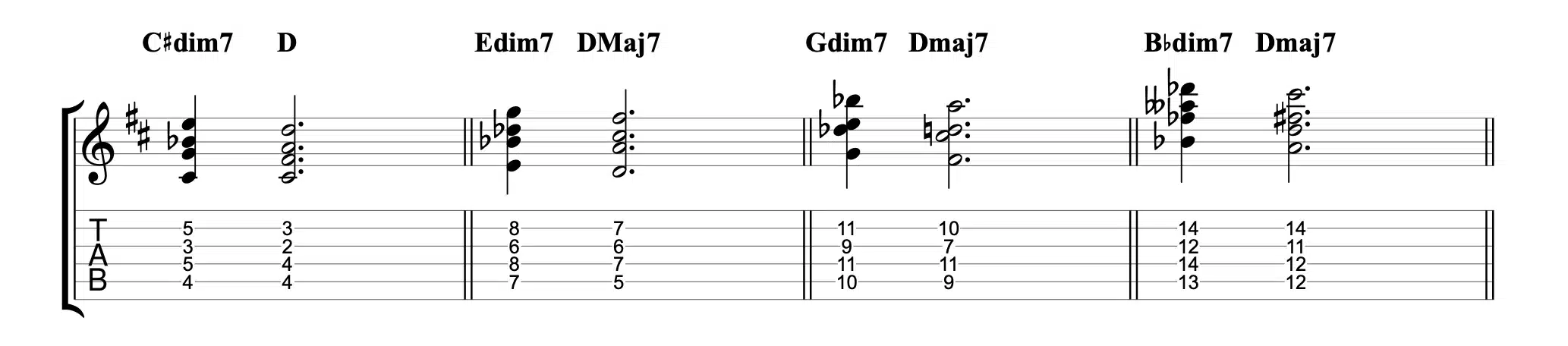
You’ll notice here I’ve referred to the diminished 7th chord names rather than A7(♭9). These are totally interchangeable, so use whatever you find easiest to visualise. The most important thing is seeing/hearing the resolution to the D chord.
Work through these ideas across the entire neck, allowing your ear to coordinate with the hands. Some of these chord shapes are a bit of a stretch, but over time, this will build a more intuitive grasp of voice leading, enabling you to navigate the instrument with greater freedom and musical intent.