Pivot Arpeggios: Sounding More Melodic
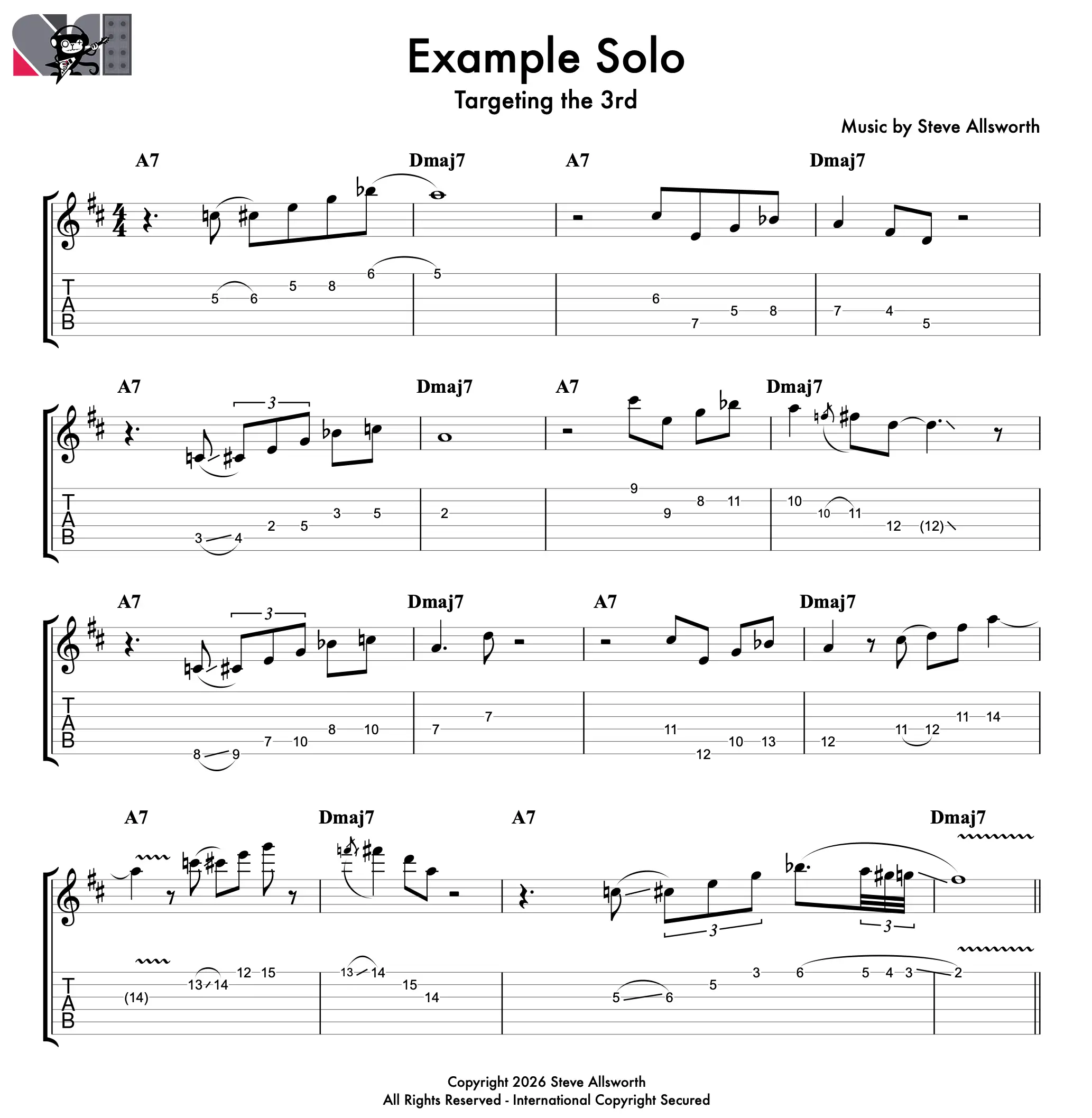
Example Solo
Lesson Material
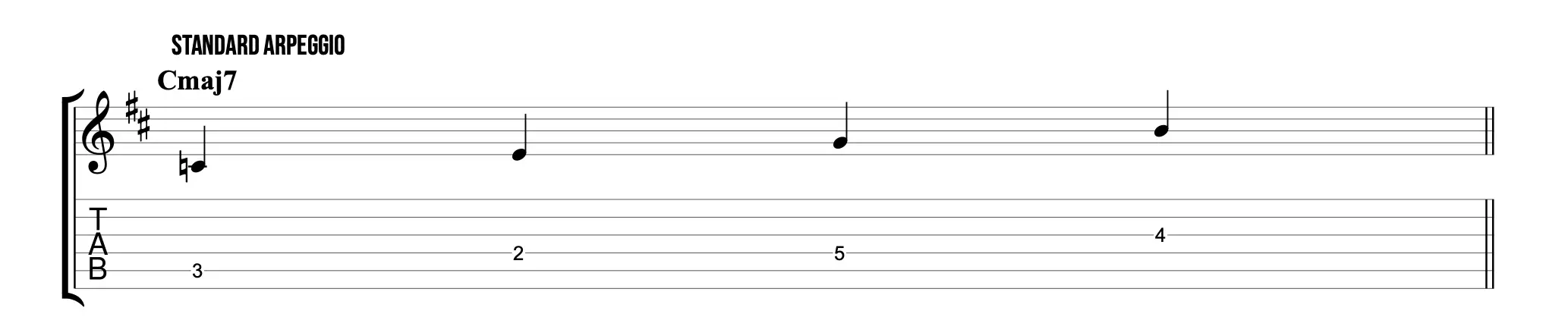
Another effective way to create a more melodic sound in your playing is through the use of pivot arpeggios. The basic idea is to take a familiar structure – such as a Cmaj7 arpeggio:
We then alter its order by displacing the root up an octave:
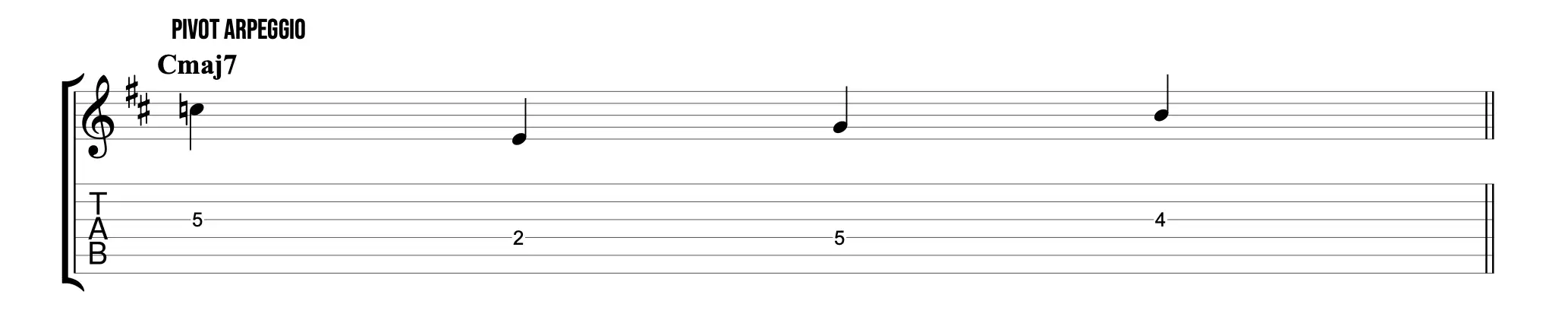
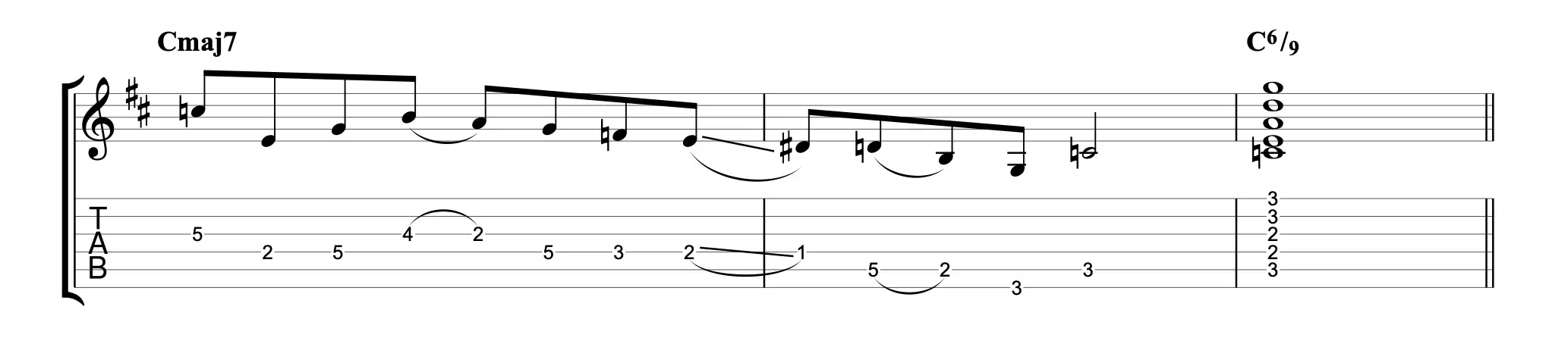
This simple adjustment produces a more flowing, less predictable shape, breaking away from the straightforward 1-3-5-7 sequence and potentially giving us more melodic lines:
When applied to diminished 7th arpeggios, the pivot shape couldn’t be simpler:
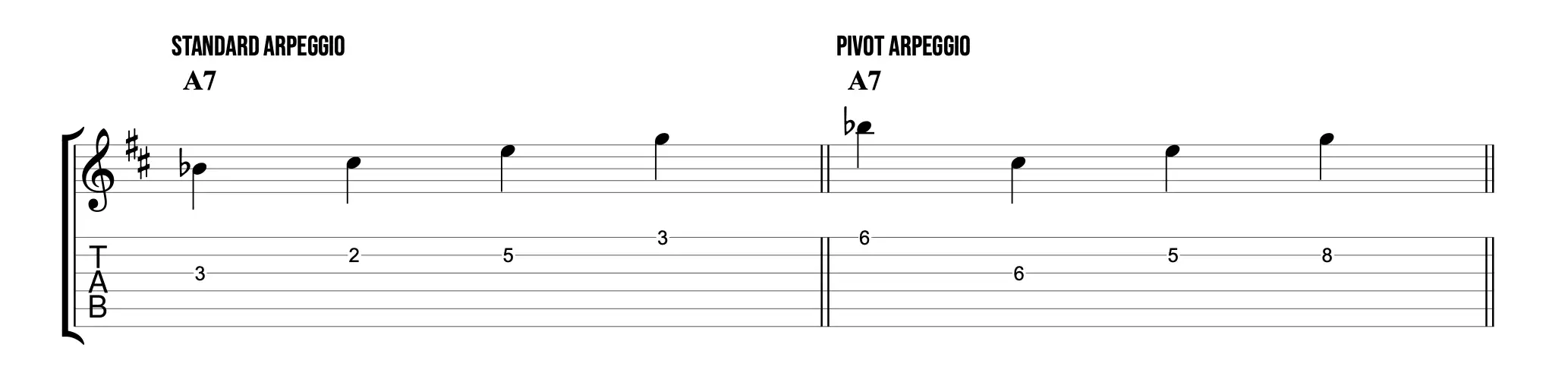
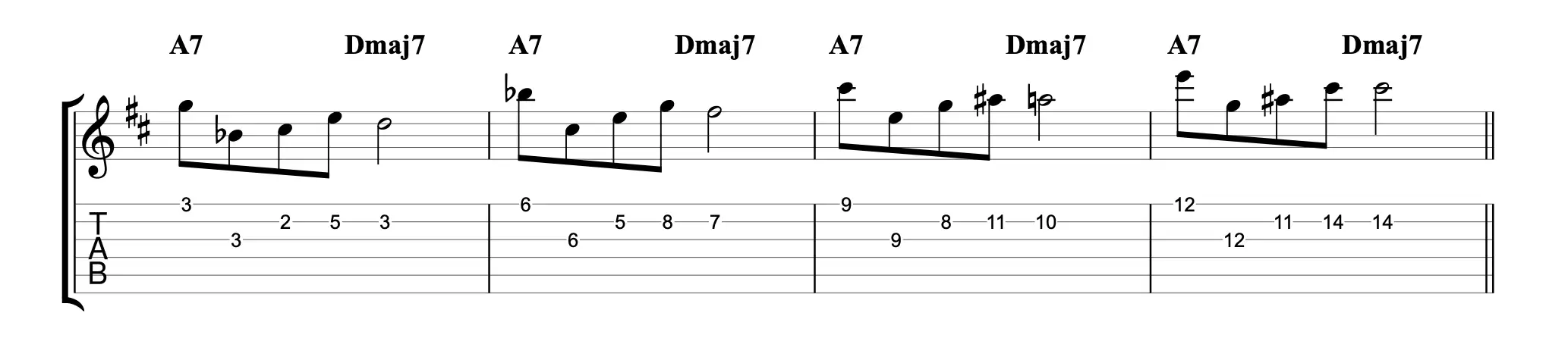
By reordering the notes you’ll arrive at a three-note, triangular shape often associated with classic blues vocabulary (think of “Red House”). From there, adding the remaining chord tone completes the structure and opens up a range of melodic possibilities. When resolving into a D major7 chord, this approach provides a smooth, melodic pathway. Try the following exercise:
This method is especially valuable because it encourages you to visualise the diminished seventh arpeggio as a contained, interconnected shape rather than a series of isolated notes. As you move across the strings, the inversions reveal themselves as part of a single unified structure:
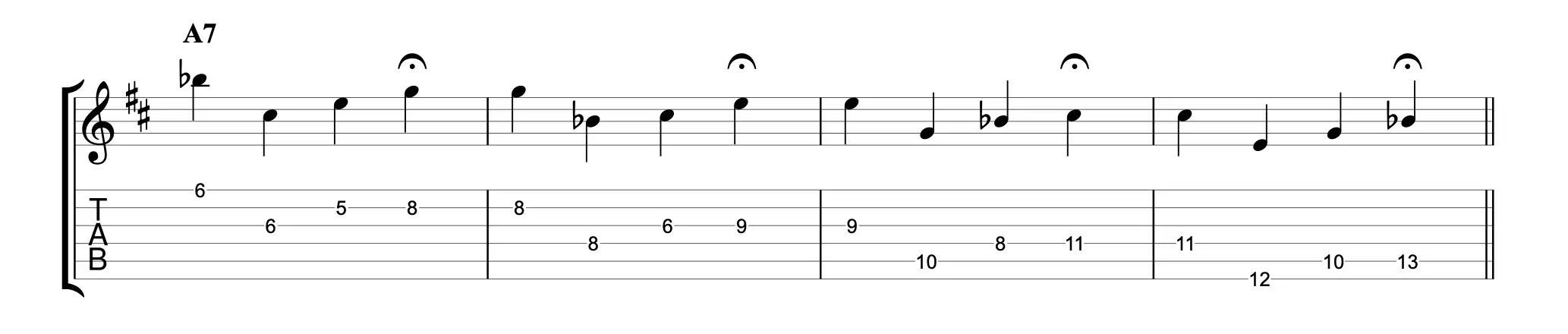
The goal – as always – is to develop an awareness of these larger chord forms across the fretboard.
Of course, mapping these interconnected shapes across the entire neck requires time and consistent practice, particularly when applied over different dominant seventh chords. For that reason, beginning with a clear target, such as the major third, is a practical and effective entry point.
With that in mind, the example solo combines pivot and standard ascending arpeggios to help you target the major third – C# – over an A7 chord.