Performance Notes
Lesson Material
The étude should help consolidate the key ideas we’ve explored so far regarding resolution from a V chord to a form of I chord – in this case, resolving to a minor tonic.
As mentioned previously, the goal is not simply to memorise and recycle licks. These examples are far more valuable when treated as starting points for developing your own musical vocabulary. That said, several ideas from Module 2 have been reworked here to demonstrate how a single concept can be adapted and applied in a completely different harmonic setting.
The first example draws inspiration from the “slippery” line introduced in Line #2 from Module 2, built around the familiar half-whole diminished scale shape. Here’s the original line for context:
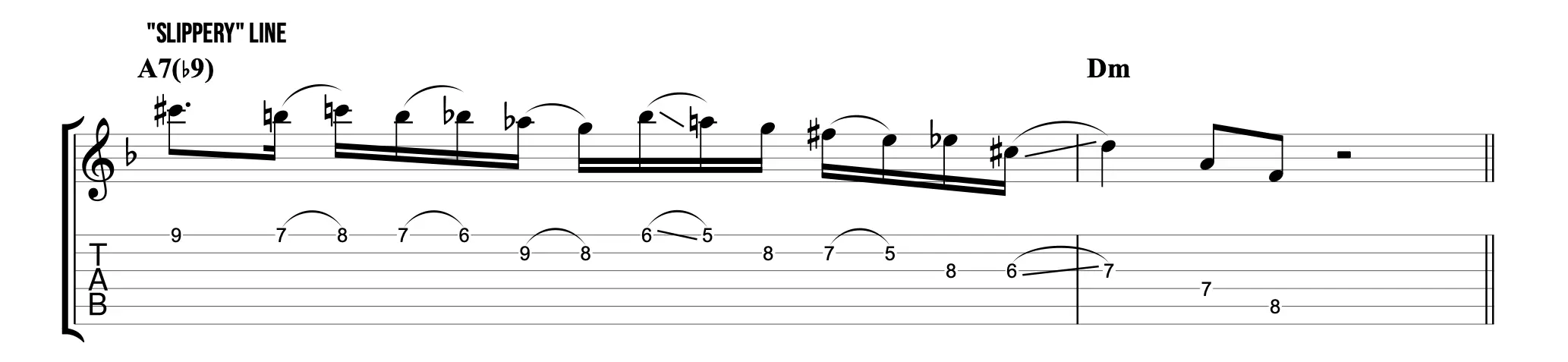
And here’s the adapted line:
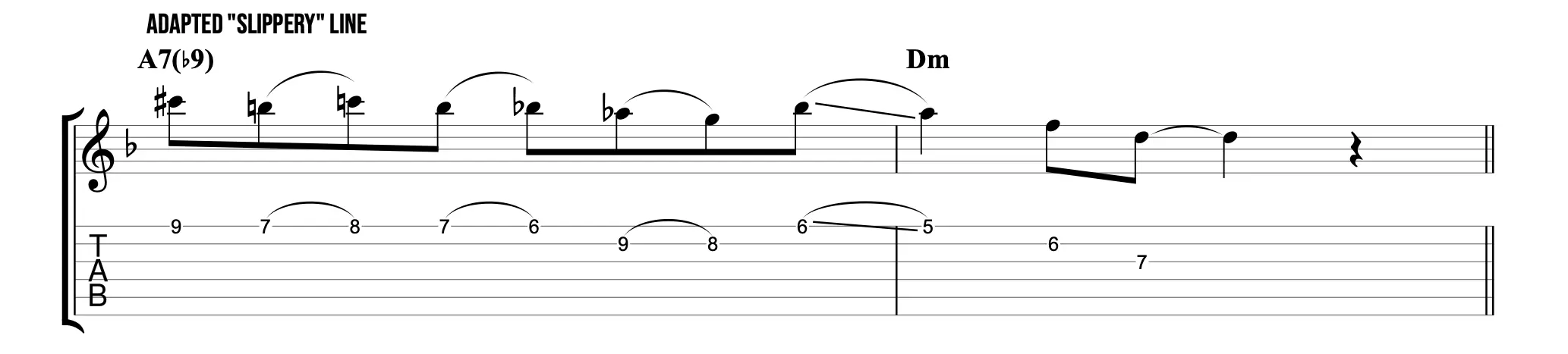
Although the phrasing has been adjusted to suit the Bossa groove, the core idea remains the same, showing how flexible these lines can be when transferred into new rhythmic and harmonic contexts.
The second concept comes from line #12, where perfect fourths were moved in minor-third intervals:
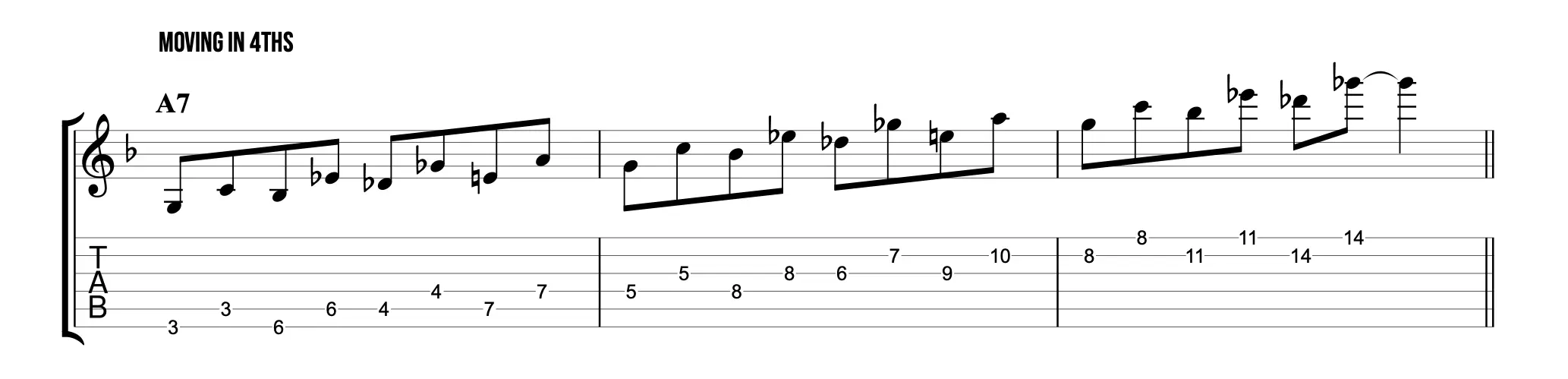
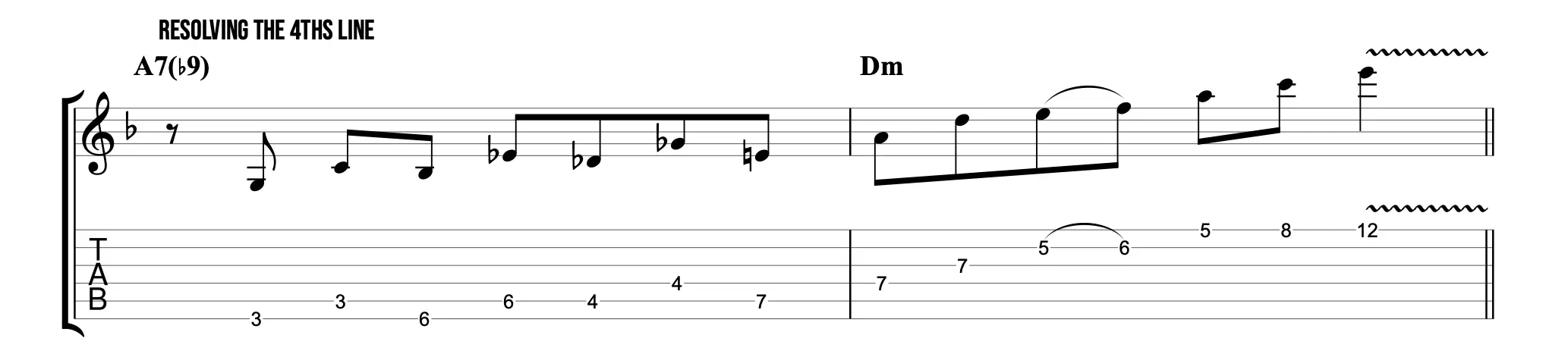
Recontextualising this sound within a V – i progression highlights just how versatile these diminished concepts can be – I’m a big fan of this idea, as it sounds outside and doesn’t have an obvious diminished sound:
The final reworked idea was adapted from the Michael Brecker concept explored in line #22. In the original example, the line descended in minor thirds:
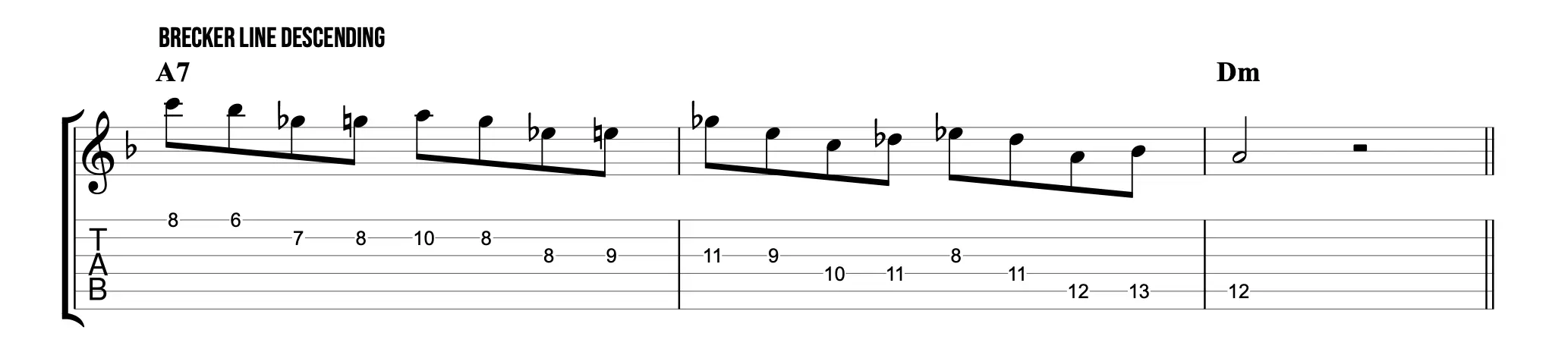
In the étude the movement ascends in minor thirds instead. Each of these three-fret positions can then be resolved smoothly into D minor, creating a strong sense of forward motion and resolution:
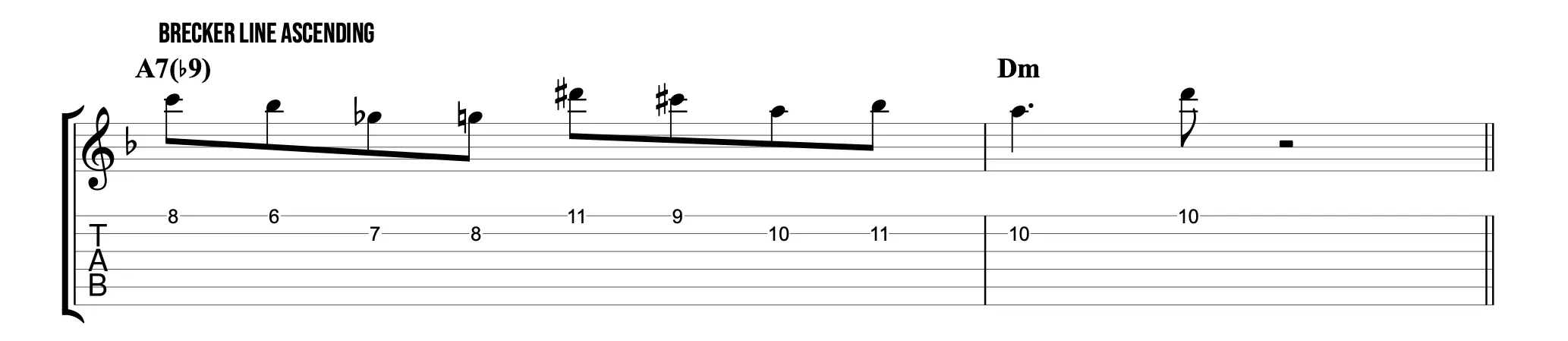
Ultimately, the possibilities here are virtually endless. Any of the ideas explored throughout Module 2 can be adapted and developed within this V – I framework.
One important detail to keep in mind is that the original examples were demonstrated over D7, so applying them to A7 requires a slight adjustment – essentially shifting the material up by a semitone to fit the new harmonic context.
Next, we’ll begin exploring how these V – I resolution concepts can be applied within a standard 12-bar blues progression, adding a greater level of sophistication and harmonic depth to your blues improvisation.