Resolving to Minor: V to i
Lesson Material
Up to this point of Module 3, we’ve focused on resolving from a dominant 7th chord to a major chord. However, the same principle works just as effectively when resolving to a minor chord, provided the harmonic motion still moves down a fifth. This type of resolution is extremely common across blues, jazz, and rock, making it an essential sound to internalise and incorporate into your playing.
A useful way to begin exploring the sound and harmonic movement is through a pivot arpeggio exercise:
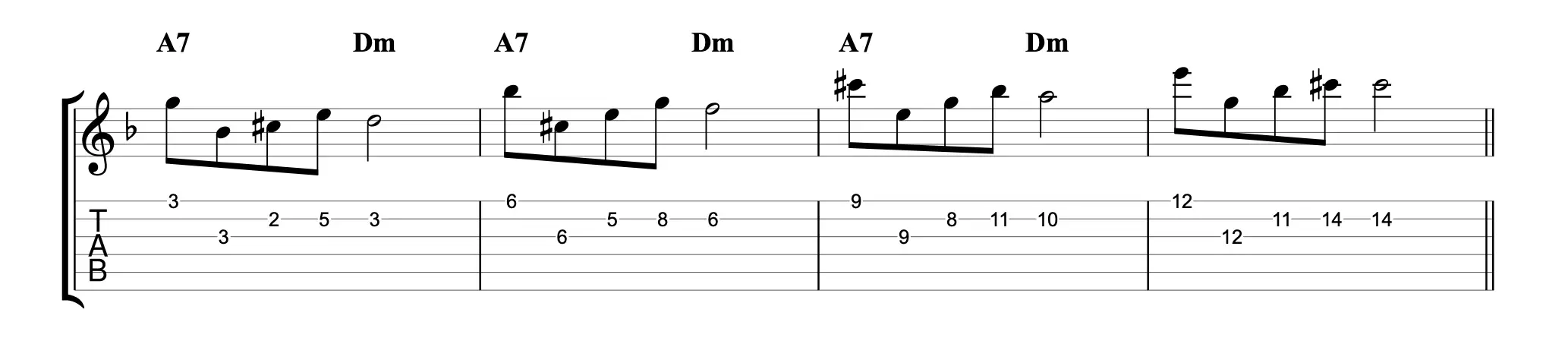
When applied in this context, the sound takes on a slightly more classical character – almost reminiscent of Bach – as it outlines a movement from a diminished seventh arpeggio into a D minor triad.
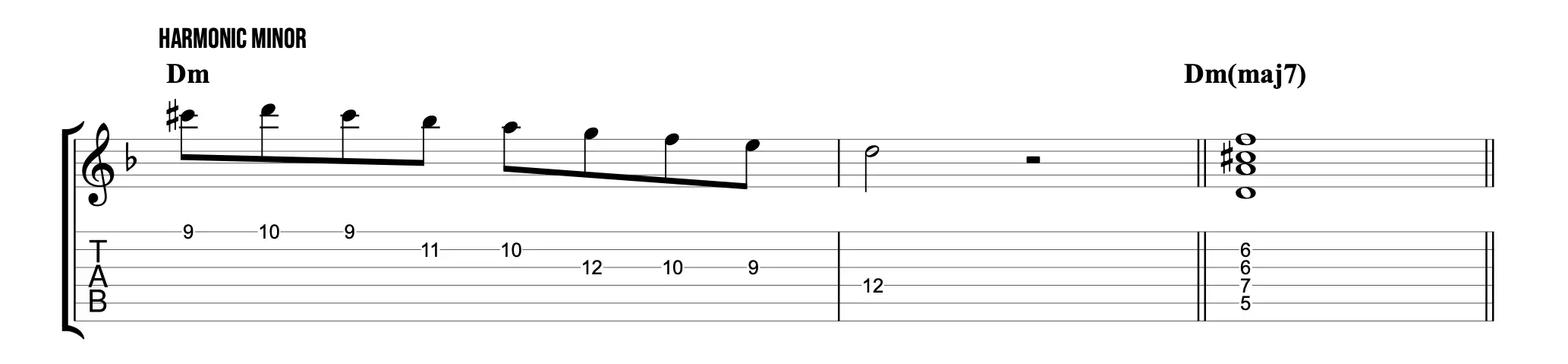
There is, however, an interesting variation worth highlighting from bar 4. If you resolve to C# instead of a chord tone from D minor, the sound suggests a D harmonic minor colour. While it’s easy to go deeper into scale choices here, the key point is that this introduces additional resolution options beyond the root, 3rd, and 5th of the chord. In this case, the line implies a Dm/maj7 sound, which creates a lovely tension:
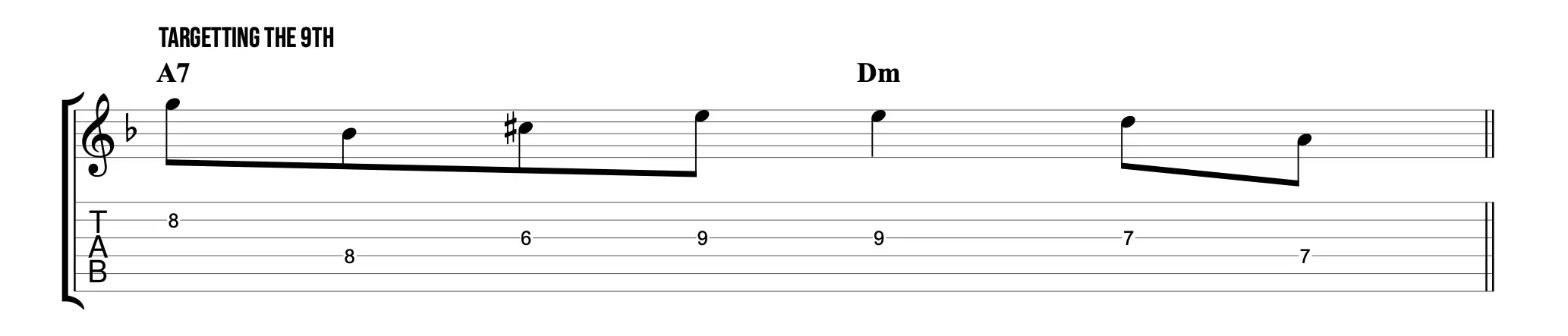
Another note to consider as a resolution target is the 9th. In the key of D minor, this would be E. Resolving to this note produces a Dm9 or Dm(add9) sound, offering a more open and subtle quality as you resolve from A7 to D minor:
To bring these ideas together, I’ve prepared a short Étude that explores these concepts in context. The harmony moves from A7(♭9) to D minor over the same Bossa-style groove, so we’ll be playing similar ideas to previous lessons, but with the new resolution.
To further reinforce the connections between concepts, I’ve also incorporated ideas and lines from earlier studies (I’ll break these down afterwards), demonstrating how interchangeable and adaptable these approaches can be across different musical settings.